 Keilini
Updated October 2026 · Written by the Keilini Heater Pro UK team
Quick answer
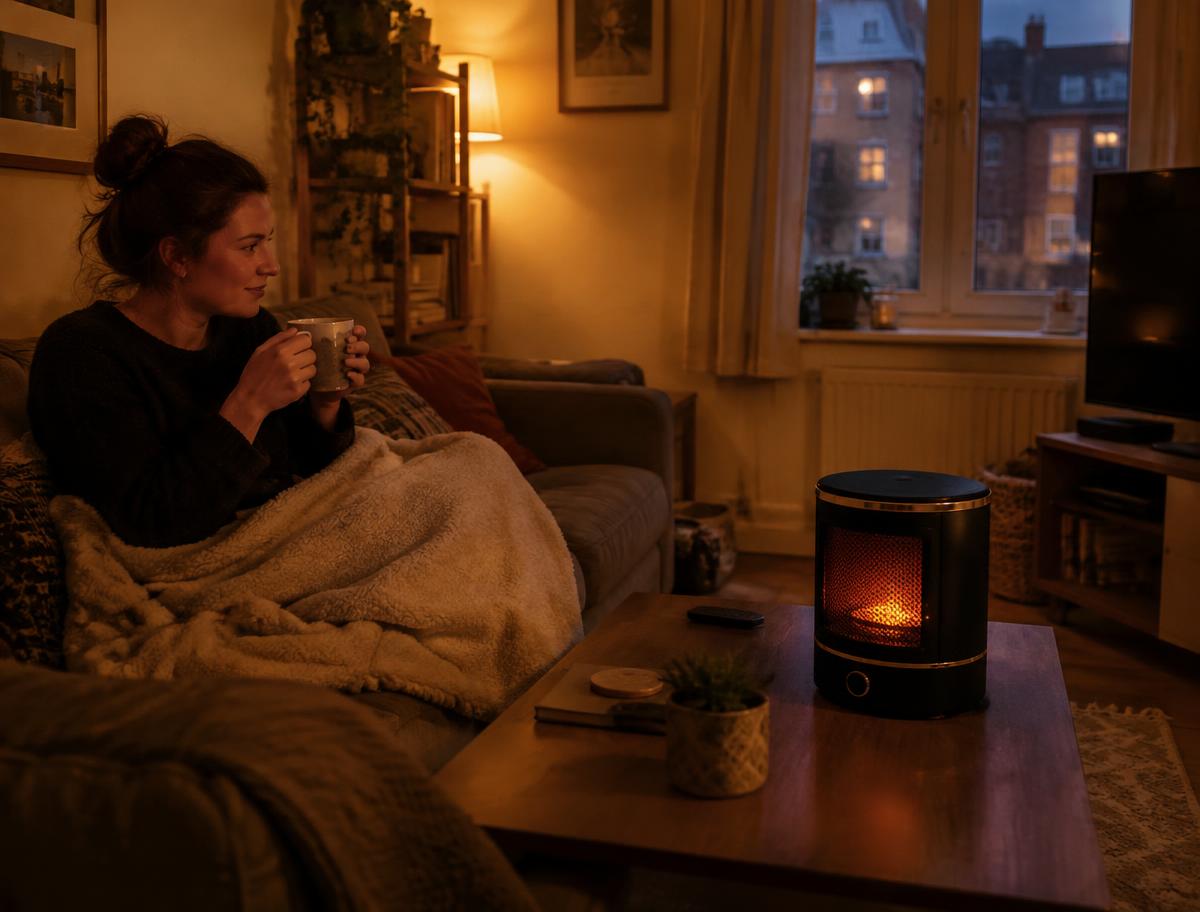
Are space heaters worth it in the UK? If you spend most evenings in one room, a space heater lets you heat that room and turn the thermostat down elsewhere, which can lower total heating costs.
What is a space heater?
"Space heater" is the umbrella term for any standalone heater that warms a single room or area. In the UK they're often called portable heaters, plug-in heaters or electric room heaters.
Why use one?
- Turn central heating down and heat only occupied rooms
- Warm cold spots — loft rooms, extensions, conservatories
- Instant heat in the morning or evening
- Extra warmth for older relatives or people who feel the cold
Space heater safety
Most heater-related fires involve something placed too close. Keep a metre clear around it, never cover it, and choose a model with tip-over and overheat protection and a timer.
Choosing a space heater for your room size
Space heaters cover a wide range of power and styles, so matching one to your room matters more than the label. A small bedroom, box room or home office will usually feel the benefit of a compact heater within minutes. A larger lounge, open-plan kitchen-diner or a conservatory with lots of glass will need either a higher-output heater, a longer run time, or heating support from another source.
If you're not sure, think about how cold the room gets and how long you'll be in it. Short, frequent use in a small room suits a fast-heating compact unit; long sessions in a bigger space suit something designed to hold heat, such as an oil-filled radiator.
What a space heater really costs to run
Like any plug-in heater, the cost depends on wattage and your electricity tariff rather than the model name. A 1kW heater uses 1kWh per hour — at 25p per kWh that's 25p an hour, at 30p per kWh it's 30p an hour. Look up your own unit rate on your bill or Ofgem's price cap page and do the sum for your heater's actual wattage.
A thermostat reduces real-world cost because the heater cycles off once the room is warm enough, rather than running at full power the entire time it's switched on.
Our pick for warming one room
Keilini Heater Pro
Ceramic PTC · warm in ~3s · 36–45dB · tip-over & timer shut-off
£59.98£119.98Save 50%
See packs & prices- Free UK delivery
- 30-day returns
- Secure checkout
Damp rooms, condensation and ventilation
Space heaters are popular in conservatories, caravans and older extensions that feel cold and sometimes damp. Warming the air can help reduce condensation on cold surfaces, but a heater alone won't fix an underlying damp or ventilation problem. If a room has persistent damp, mould or poor ventilation, address that first — heaters only treat the symptom, not the cause.
Avoid drying wet clothes on or near any electric heater; it's a common cause of both damage to the heater and house fires, and it adds moisture to the air rather than removing it.
Using a space heater to manage your heating bill
The appeal of a space heater is heating the room you're actually using instead of the whole house. If you live alone, or only use certain rooms in the evening, turning the central heating down and using a space heater locally can reduce your total energy spend — provided you're not simply adding extra heat on top of a house that's already warm.
Keep doors closed to stop warm air escaping, and use the timer so the heater doesn't carry on running once you've gone to bed or left the room.
Who should consider a different type of heater
If you need gentle, silent heat running for most of the day — for example for an elderly relative who feels the cold constantly — an oil-filled radiator may suit better than a fan-based space heater, since it holds its heat and runs quietly. If you need to heat a large outdoor or very draughty space, an infrared or halogen heater that warms people and objects directly can work better than one that heats air.
Where Keilini Heater Pro fits
Keilini Heater Pro is a compact ceramic PTC fan heater. It starts producing warm air in around 3 seconds, spreads it through a 90° grille, and runs at roughly 36–45dB. A built-in thermostat holds your chosen temperature, a tip-over switch cuts power if it is knocked over, and a timer switches it off after 1–12 hours.
It is designed to warm the room you are in — not to replace central heating for a whole house.
Buying checklist
- Wattage appropriate to your room size and how long you'll run it
- Thermostat to avoid constant full-power operation
- Tip-over switch and overheat protection
- Timer for automatic switch-off
- Stable base suited to the flooring you'll use it on
- Cool-touch casing, especially around children or pets
- UKCA or CE marking and a UK plug
- Clear running-cost information in the listing or manual
Mistakes to avoid
- Using a space heater to try to fix damp or condensation instead of ventilation
- Drying clothes on or near the heater
- Running it in a large room expecting whole-house-level warmth
- Placing it on an uneven or soft surface where it could tip
- Forgetting to switch it off when you leave the room
- Choosing on price alone without checking safety certification
Our pick for warming one room
Keilini Heater Pro
Ceramic PTC · warm in ~3s · 36–45dB · tip-over & timer shut-off
£59.98£119.98Save 50%
Or 3 for £139.97 — £46.66 each.
See packs & prices- Free UK delivery
- 30-day returns
- Secure checkout
Frequently asked questions
Are space heaters worth it in the UK?
If you spend most evenings in one room, a space heater lets you heat that room and turn the thermostat down elsewhere, which can lower total heating costs.
Can a space heater heat a whole house?
No — they're designed for single rooms. Use central heating for whole-house heating.
Which space heater is safest?
Look for ceramic PTC elements, tip-over switches, cool-touch casings and timers.
Can I leave a space heater on overnight?
Only with tip-over and overheat protection and preferably a timer, kept clear of bedding and soft furnishings. Many people prefer to run it until bedtime and let the room's residual warmth see them through the night.
How much does a space heater cost to run per hour in the UK?
A 1kW space heater uses 1kWh per hour, so at 25p per kWh that's 25p an hour. Use your own electricity rate from your bill or Ofgem's price cap page with your heater's wattage.
Is a space heater cheaper than central heating?
Usually cheaper for warming just one room for a limited time, since you avoid heating the whole house. For heating the entire home for long periods, central heating is typically cheaper per unit of heat.
Will a space heater help with a damp conservatory?
It can take the chill off and reduce condensation on cold surfaces, but it won't fix an underlying damp or ventilation problem — tackle that separately for a lasting solution.
What's the difference between a space heater and a portable heater?
They're largely the same thing — 'space heater' describes any standalone unit that heats a single area, while 'portable heater' emphasises that you can move it between rooms.