 Keilini
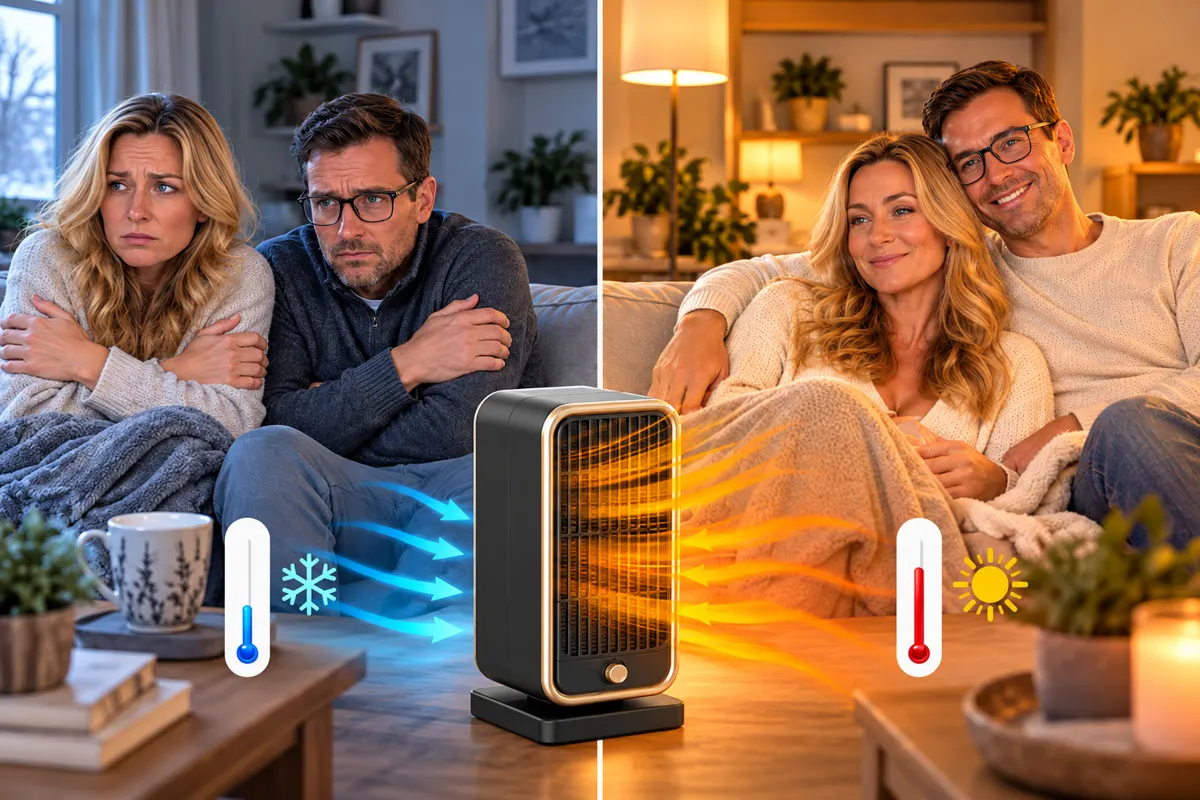
Quick answer: No electric heater is magically more "efficient" than another at turning electricity into heat — nearly all of it becomes warmth either way. The real savings come from using a heater sensibly: warming only the room you're actually in, using a thermostat so it doesn't run flat out once the room is warm, and switching off with a timer rather than leaving it on by habit. Keilini Heater Pro is built with those controls in mind.
The idea: heat people, not empty rooms
Most UK homes heat every room to the same temperature even when only one is in use. Turning the central heating down a degree or two and warming the room you're sitting in with a small heater — known as zone heating — can reduce total energy use, because you're not paying to keep an empty spare room or hallway at living-room temperature.
What "energy efficient" really means for an electric heater
Unlike boilers, which can waste energy through flues and pipework, electric resistance and ceramic heaters convert almost all of the electricity they draw into heat. That means a 1kW heater and another 1kW heater will use roughly the same electricity for the same running time, whatever the brand. Where efficiency really comes from is good controls — a thermostat, a timer, and not oversizing the heater for the room — plus simply not leaving it running when nobody's there.
How Keilini Heater Pro helps you use less
- A thermostat that stops it running flat out once the room is warm
- A 1–12 hour timer, so it never runs all night or all day by accident
- Fast heat-up (around 3 seconds), so there's no need to switch it on "just in case" well before you need it
- A 90° airflow grille that directs heat towards you rather than wasting it on the whole room
Will it lower my bills?
Any electric heater turns electricity into heat, so the saving comes from how you use it. If a small heater lets you turn down or switch off the central heating in the rest of the house while you're in one room, you are likely to spend less overall. Results depend on your tariff, home insulation, how many rooms you'd otherwise be heating, and your usage habits — so it's sensible to try it and compare a few weeks of bills rather than assume a fixed saving.
Working out the running cost
As a simple example, a 1kW heater running at 25p/kWh costs about 25p an hour. Check Ofgem's current price cap for the unit rate that applies to your household, then multiply by the hours you expect to use it. Our running cost guide walks through worked examples, and our cheapest heater to run in the UK page compares heater types more broadly.
Other ways to cut heating costs this winter
- Draught-proof doors, windows and letterboxes — a free or low-cost first step
- Close curtains at dusk to keep warmth in
- Bleed radiators so your central heating works efficiently where you do use it
- Check loft and wall insulation, which the Energy Saving Trust has detailed guidance on
- Use a portable heater like Keilini Heater Pro to top up warmth in the one room you're using
A buying checklist for an energy-efficient heater
- Does it have a thermostat, or only a fixed on/off power setting?
- Does it have a timer, so you can't accidentally leave it running for hours?
- Is the wattage appropriate for the room size you intend to heat?
- Does it heat up quickly, so you're not tempted to leave it on in advance "just in case"?
- Does the seller offer a fair trial period, such as a 30-day money-back guarantee, so you can test real-world savings?
Keilini Heater Pro comes with free tracked UK delivery and a 30-day money-back guarantee. See current pack prices, from £59.98.
Who should choose something else
If your home is large, open-plan, or poorly insulated, a single portable heater won't meaningfully cut your overall bills — the bigger wins will come from insulation, draught-proofing and checking your boiler is serviced and set up efficiently. If you need to heat several rooms at once for hours on end, central heating is likely to work out more cost-effective than running multiple portable heaters. And if whisper-quiet, unattended overnight background warmth across a large room is the priority, an oil-filled radiator may suit you better than a ceramic fan heater — see our oil-filled radiator vs ceramic heater comparison.
Safety while saving money
Don't be tempted to run an uninsulated space constantly with a heater instead of fixing the underlying draughts — it will usually cost more in the long run. Whatever heater you use, keep it clear of furniture and fabric, and see our heater safety guide for full guidance.
Frequently asked questions
What counts as an energy-efficient heater?
There's no official efficiency rating for electric heaters the way there is for boilers, because all electric resistance heaters convert almost all the electricity they use into heat. 'Efficient' in practice means using the heater sensibly — a thermostat, a timer, and warming only the room you're in — rather than one model being inherently more efficient than another at the same wattage.
Is a ceramic heater more energy-efficient than an oil-filled radiator?
Both convert electricity to heat at a similar basic efficiency. The difference in your bills usually comes from wattage, how long each is run, and whether it lets you avoid heating the whole house — not from the heating technology itself.
Will using a plug-in heater instead of central heating save me money?
It can, if it lets you turn down or switch off heating in rooms you're not using, and you don't also leave it running when you don't need it. Savings depend on your tariff, insulation and habits, so results vary between households.
Does a thermostat actually make a heater cheaper to run?
Yes — a thermostat stops the heater running at full power once the room has reached a comfortable temperature, rather than heating continuously at maximum. That typically uses less electricity than a heater with no temperature control.
How much does it cost to run a small heater for an evening?
As a rough guide, a 1kW heater costs about 25p an hour at 25p/kWh, so three hours would be about 75p — check Ofgem's current price cap for the exact rate that applies to you, and see our running cost guide for more examples.
Is it cheaper to heat one room or the whole house?
Heating only the room you're using is generally cheaper than heating an entire house to the same temperature, provided the heater you use is sized appropriately and you're not also leaving central heating running unnecessarily.