 Keilini
Updated October 2026 · Written by the Keilini Heater Pro UK team
Quick answer
Can I use a desk heater in an office? Check your workplace's rules on personal heaters; many offices require PAT testing.
Why a desk heater beats turning the heating up
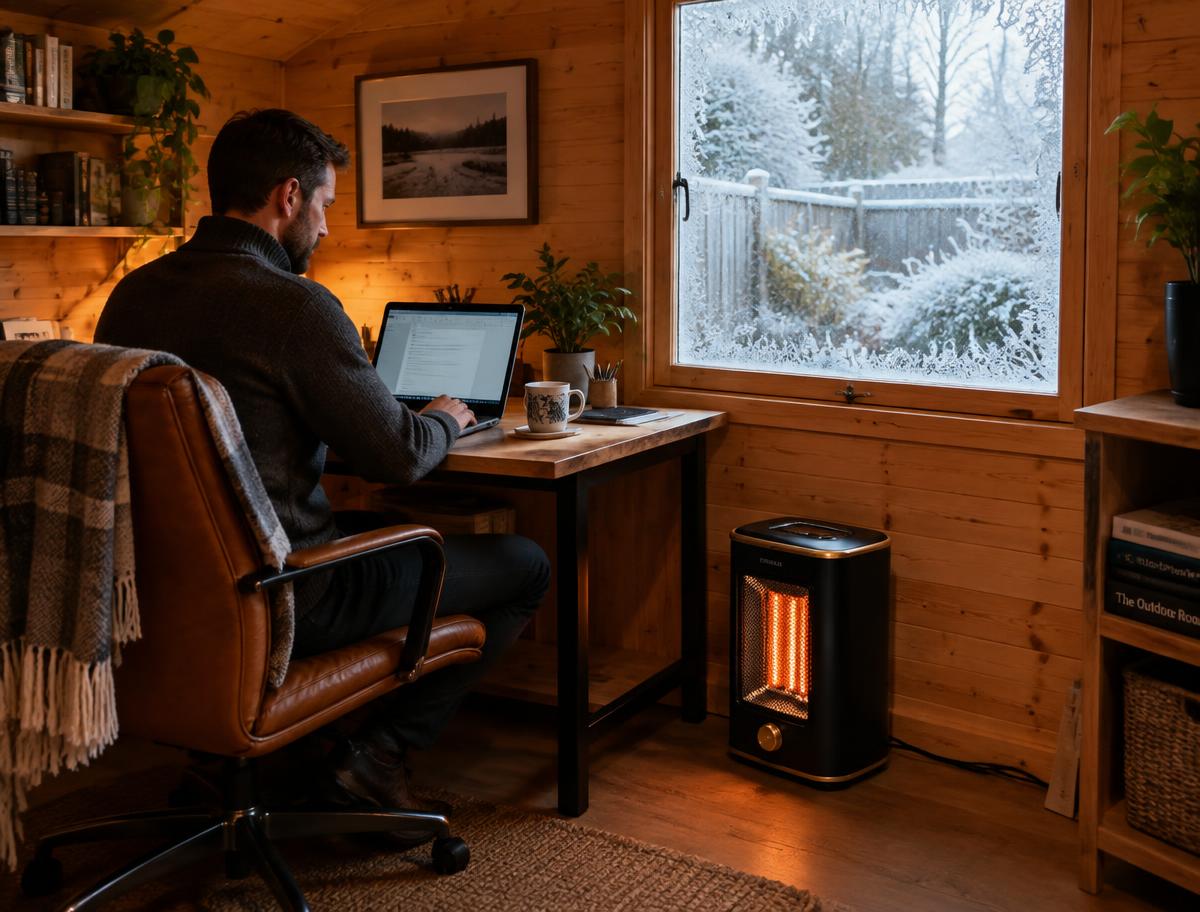
If you work from home, heating the whole house from 9 to 5 for one person is expensive. A desk heater warms just you.
Desk heater checklist
- Quiet enough for video calls (under ~45dB)
- Compact footprint
- Timer for end-of-day auto-off
- Stable base and tip-over switch
Under the desk or on top?
On the floor under your desk warms your feet and legs; on the desk warms your hands and upper body. Either way, keep cables, papers and bags clear of the outlet.
How much desk or floor space you actually need
Desk heaters are built for personal space rather than a whole room, so think about where it will sit: on the desk pointed at your hands and face, or on the floor underneath aimed at your feet and legs. Either way, check it fits comfortably without crowding your keyboard, mouse or paperwork, and that the cable can reach your socket without stretching across the floor.
If you share an office or work in a large open-plan space, remember a desk heater is designed to warm you, not the whole room — don't expect it to noticeably change the temperature for colleagues several desks away.
What a desk heater costs to run through a working day
Running cost comes down to wattage and hours used, the same as any plug-in heater: a 1kW heater uses 1kWh per hour, costing 25p an hour at a 25p/kWh rate. Over a typical working day with a thermostat cycling it on and off, the real cost is usually lower than running it at full power for eight hours straight. Check your own tariff on your bill or Ofgem's price cap page to estimate your figure.
Compared with heating a whole house or office for one person, a desk heater used just during work hours can be a noticeably cheaper way to stay comfortable.
Our pick for warming one room
Keilini Heater Pro
Ceramic PTC · warm in ~3s · 36–45dB · tip-over & timer shut-off
£59.98£119.98Save 50%
See packs & prices- Free UK delivery
- 30-day returns
- Secure checkout
Keeping desk clutter and cables safe
Desks tend to accumulate paper, cables and bags, all of which need to stay clear of a heater's air outlet and casing. Route the heater's cable away from your feet and chair wheels, and keep paperwork, tissues and anything flammable at least the recommended clearance distance away — usually around a metre, more if the manual says so.
If it sits under the desk, make sure nothing (bags, boxes, cables) blocks the airflow, as this can cause it to overheat and trip its safety cut-out unnecessarily.
Desk heater vs heating the whole room
If you work from home, running central heating across the house just to keep one person warm at a desk is usually more expensive than using a compact desk heater for the hours you're actually working. The saving is biggest if you're home alone during the day and would otherwise heat empty rooms.
That said, if several people are working from home in the same house, or you're in the room most of the day anyway with the heating on regardless, a desk heater may add to your costs rather than reduce them — think about your actual situation before assuming it will save money.
Where Keilini Heater Pro fits
Keilini Heater Pro is a compact ceramic PTC fan heater. It starts producing warm air in around 3 seconds, spreads it through a 90° grille, and runs at roughly 36–45dB. A built-in thermostat holds your chosen temperature, a tip-over switch cuts power if it is knocked over, and a timer switches it off after 1–12 hours.
It is designed to warm the room you are in — not to replace central heating for a whole house.
Buying checklist
- Small enough footprint for your desk or under-desk space
- Quiet operation, ideally under 45dB, for calls and concentration
- Cable length suited to your desk and socket position
- Tip-over switch and overheat protection
- Timer for automatic end-of-day switch-off
- Stable base that won't be knocked by your knees or chair
- Cool-touch casing for safety in close quarters
- Check your workplace's policy on personal heaters, including PAT testing
Mistakes to avoid
- Letting papers or cables creep into the heater's airflow or clearance zone
- Placing it where the airflow blows across colleagues nearby
- Blocking the under-desk space with bags or boxes
- Forgetting to switch it off at the end of the working day
- Using a personal heater at work without checking office policy
- Running it continuously instead of letting the thermostat cycle
Our pick for warming one room
Keilini Heater Pro
Ceramic PTC · warm in ~3s · 36–45dB · tip-over & timer shut-off
£59.98£119.98Save 50%
Or 3 for £139.97 — £46.66 each.
See packs & prices- Free UK delivery
- 30-day returns
- Secure checkout
Frequently asked questions
Can I use a desk heater in an office?
Check your workplace's rules on personal heaters; many offices require PAT testing.
Is it quiet enough for calls?
Keilini Heater Pro runs at roughly 36–45dB, which most people find fine for calls.
Can I leave a desk heater on overnight?
It's not designed for that use — switch it off when you finish work, ideally using a timer, since it's meant for daytime personal warmth rather than unattended overnight running.
How much does a desk heater cost to run per hour in the UK?
The same as any similarly rated plug-in heater: a 1kW model uses 1kWh per hour, costing 25p an hour at a 25p/kWh tariff. Check your own rate on your bill or Ofgem's price cap page.
Is a desk heater cheaper than heating the whole house for one person working from home?
Usually yes if you're the only one home and would otherwise heat empty rooms. If the rest of the house is heated anyway, the saving is smaller.
Can I use a desk heater in the office?
Often yes, but check your workplace's policy — many offices require personal electrical appliances to be PAT tested before use.
Is it quiet enough for video calls?
Many desk heaters, including those rated around 36–45dB, are quiet enough that colleagues on a call shouldn't notice them.