 Keilini
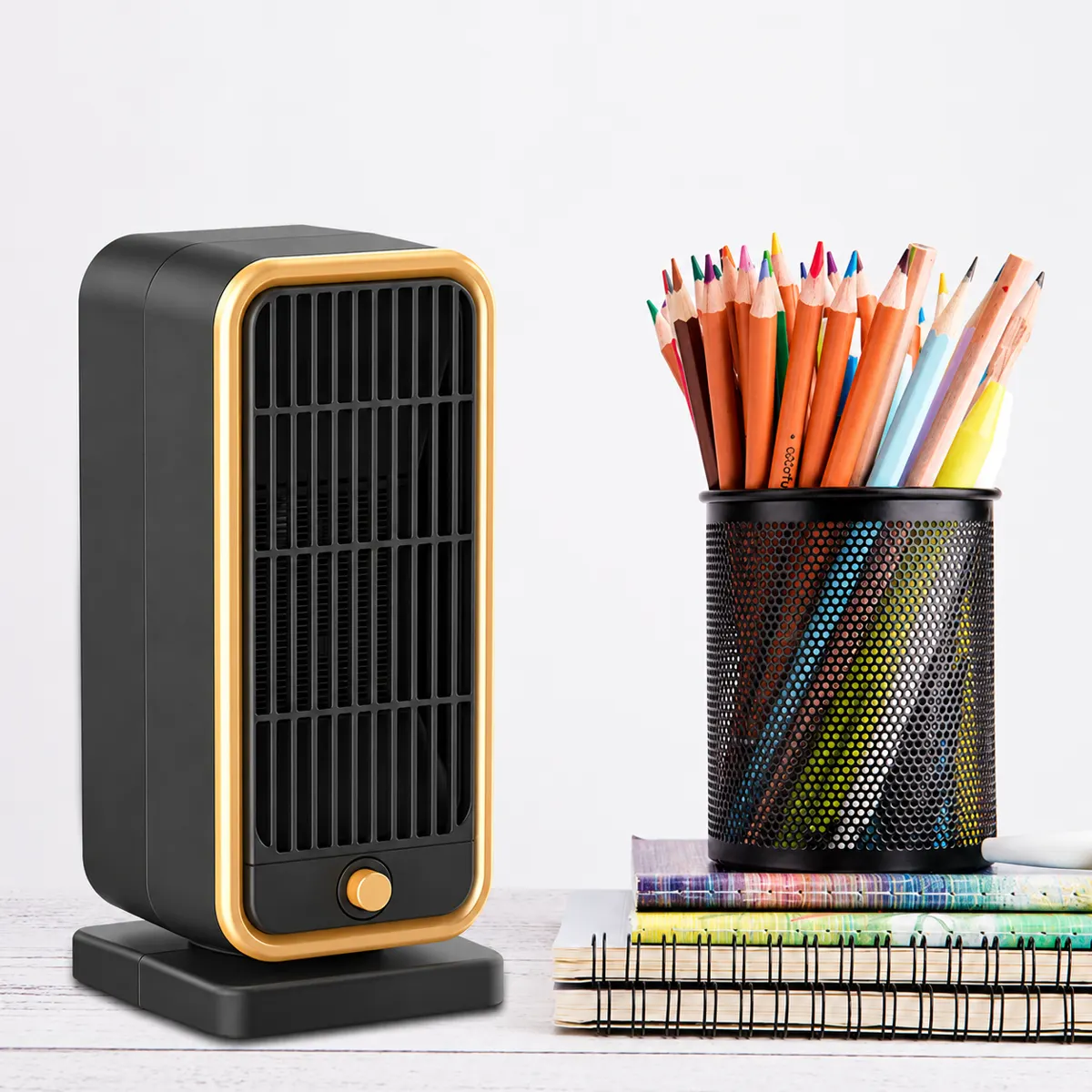
Quick answer: If you work from home and only need one room warm during working hours, a compact plug-in heater like Keilini Heater Pro at your desk is usually more practical than running the central heating for the whole house. It warms up in about 3 seconds, runs quietly enough for calls, and has a timer so it switches off automatically at the end of your working day.
Why a desk heater makes sense for home working
If you work from home, you might only need one room warm from 9 to 5, while the rest of the house sits empty. A compact plug-in heater under or beside your desk keeps you comfortable without the boiler running all day for rooms nobody is using. It's also easy to move the same heater between your office and living room once your working day ends.
What to look for in a home office heater
- Quiet operation — important if you're on video calls through the day
- Fast heat-up — so you're not cold for the first 20 minutes of the morning
- Compact size — small enough for a desk, shelf or under-desk spot
- A timer — to switch off automatically at the end of the working day
- Basic safety features — tip-over and overheat protection, especially near cables and paperwork
How Keilini Heater Pro is built for working hours
Keilini Heater Pro is quiet enough for video calls, running at around 36–45dB, and small enough to sit on a desk or shelf. It warms the air in roughly 3 seconds, directs heat with a 90° airflow grille, and its 1–12 hour timer means it switches off at the end of your day rather than running unnecessarily into the evening. The cool-touch casing and built-in tip-over switch and overheat protection are reassuring extras for a device sitting close to where you work.
Working out what it costs to run
As a simple example, a 1kW heater running at 25p/kWh costs roughly 25p an hour — check Ofgem's current price cap for your own unit rate. Over a typical working day that's a modest, predictable cost compared with heating an entire house. See our running cost guide for more worked examples, and our cheapest heater to run in the UK page for a wider comparison.
Desk heater vs other options for a home office
| Option | Pros | Cons |
|---|---|---|
| Compact ceramic desk heater | Fast warm-up, quiet, portable, low cost to buy | Heats one person/small space, not a whole room |
| Oil-filled radiator | Silent, steady background heat | Slow to warm up, bulkier for a desk setup |
| Whole-house central heating | Heats every room evenly | Expensive to run for one occupied room |
For more on the ceramic-versus-oil trade-off, see our oil-filled radiator vs ceramic heater guide, or our dedicated desk heater page.
A buying checklist for a home office heater
- Will it warm up fast enough for first thing in the morning?
- Is it quiet enough not to interfere with calls and recordings?
- Does it have a timer so you don't have to remember to switch it off?
- Does it have tip-over and overheat protection, especially near cables and paper?
- Is there a fair returns policy if it doesn't suit your office space?
Keilini Heater Pro comes with free tracked UK delivery and a 30-day money-back guarantee. See current pack prices, from £59.98.
Who should choose something else
If you share a large open-plan office space with several other people, a single desk heater won't heat the whole room — you may need several heaters or a different heating solution entirely. If you work from a garden office or outbuilding, check our heater for garden office guide, since ventilation and wiring considerations differ from an indoor room. And if silence matters more to you than speed, an oil-filled radiator may suit your desk setup better than a fan heater.
Keeping your desk setup safe
Keep the heater clear of cables, paper and fabric, don't rest anything on top of it, and switch it off (or let the timer do it) when you finish for the day. See our full heater safety guide for more detail, including guidance from Electrical Safety First.
Frequently asked questions
What is the best heater for a home office?
For most home offices, a compact, quiet heater that warms up quickly suits better than a large radiator, since you're usually heating one person at a desk rather than a whole room. Look for low noise (so it doesn't disturb calls), a timer, and basic safety cut-outs.
Is it cheap to run a desk heater all day while working from home?
Running cost depends on wattage and hours used. As a guide, a 1kW heater costs about 25p an hour at 25p/kWh — check Ofgem's current price cap for your own rate. Using a timer to switch off automatically at the end of the day helps keep costs predictable.
Will a plug-in heater be too noisy for video calls?
A quiet ceramic fan heater running at around 36–45dB is generally quiet enough to sit near your desk during calls, though background noise tolerance varies by person and microphone. If noise is a major concern, position the heater a little further from your microphone or pause it briefly during calls.
Can I put a heater under my desk?
Many people do use small heaters under or beside a desk, but always follow the manufacturer's clearance guidance and keep it away from cables, bags and paper. Never block the heater's air intake or outlet.
Is it better to heat just my office or the whole house while working from home?
Heating only the room you're working in is usually cheaper than heating the whole house to the same temperature, especially if other rooms are empty during the day. Many people turn central heating down and use a small heater at their desk instead.
How do I stop a home office heater running longer than I need?
Use a built-in timer if the heater has one — Keilini Heater Pro includes a 1–12 hour timer — so it switches off automatically rather than relying on you remembering at the end of a busy day.
Many customers choose the 2-pack or 3-pack — one for the office, one for the bedroom.