 Keilini
Updated October 2026 · Written by the Keilini Heater Pro UK team
Quick answer
Are ceramic heaters energy efficient? All electric resistance heaters convert electricity to heat equally efficiently. Ceramic heaters help you use less by warming you quickly and cycling with a thermostat.
How ceramic PTC heating works
PTC means positive temperature coefficient: as the ceramic element heats up, its electrical resistance rises and it draws less current. That self-regulating behaviour means it reaches working temperature quickly and doesn't keep getting hotter.
Benefits of ceramic heaters
- Heat in seconds
- Self-limiting element temperature
- Compact and lightweight
- Usually quieter than older fan heaters
Downsides to know about
- Heat stops soon after switching off (no thermal mass)
- Best for single rooms rather than large open-plan spaces
Which rooms suit a ceramic heater
Ceramic heaters are best suited to rooms where you want warmth quickly and don't need it to linger for hours after switching off — bedrooms, home offices, box rooms and smaller living rooms are typical uses. Because the ceramic element stops producing heat almost as soon as it's switched off, it's less suited to very large rooms where you'd otherwise rely on a heater's residual warmth to keep the chill away.
For bigger or draughtier spaces, you may need to run the ceramic heater closer to where you sit, or consider pairing it with another heat source that holds warmth longer, such as an oil-filled radiator.
What a ceramic heater costs to run
A ceramic heater is still a resistance heater, so the same maths applies: a 1kW unit uses 1kWh per hour of electricity. At 25p per kWh, that's 25p an hour; check your own tariff on your bill or Ofgem's price cap page for an accurate figure, since rates vary by supplier and change over time.
The thermostat found on most ceramic heaters means the element doesn't run continuously at full power once the room reaches temperature, which keeps real-world costs lower than a straight wattage-times-hours sum would suggest.
Our pick for warming one room
Keilini Heater Pro
Ceramic PTC · warm in ~3s · 36–45dB · tip-over & timer shut-off
£59.98£119.98Save 50%
See packs & prices- Free UK delivery
- 30-day returns
- Secure checkout
Placement and safety specific to ceramic heaters
Because ceramic heaters warm up fast and often sit at floor or desk level, keep them away from trailing cables, paper and curtains, and make sure the air inlet at the back isn't blocked by a wall or furniture. A stable base matters since these units are often moved between rooms.
The ceramic element's self-limiting behaviour reduces (but doesn't eliminate) fire risk — you should still look for tip-over and overheat protection as standard features, not optional extras.
Using a ceramic heater to reduce your overall bill
Ceramic heaters suit the 'heat the person, not the house' approach well, since they warm up almost instantly. Using one in the room you're occupying, with the central heating turned down elsewhere, can lower your total energy use compared with heating every room to the same temperature all evening.
Combine this with the timer, so the heater switches off automatically rather than continuing to run once you've gone to bed or left the house.
When a ceramic heater isn't the best choice
If you want silent, steady heat running for many hours — for example overnight in a nursery, or all day for someone who's housebound — an oil-filled radiator's slower but longer-lasting warmth and typically quieter operation may suit better. If you need to warm an outdoor patio or a very draughty workshop, an infrared heater that warms objects and people directly, rather than the air, is often more effective.
Where Keilini Heater Pro fits
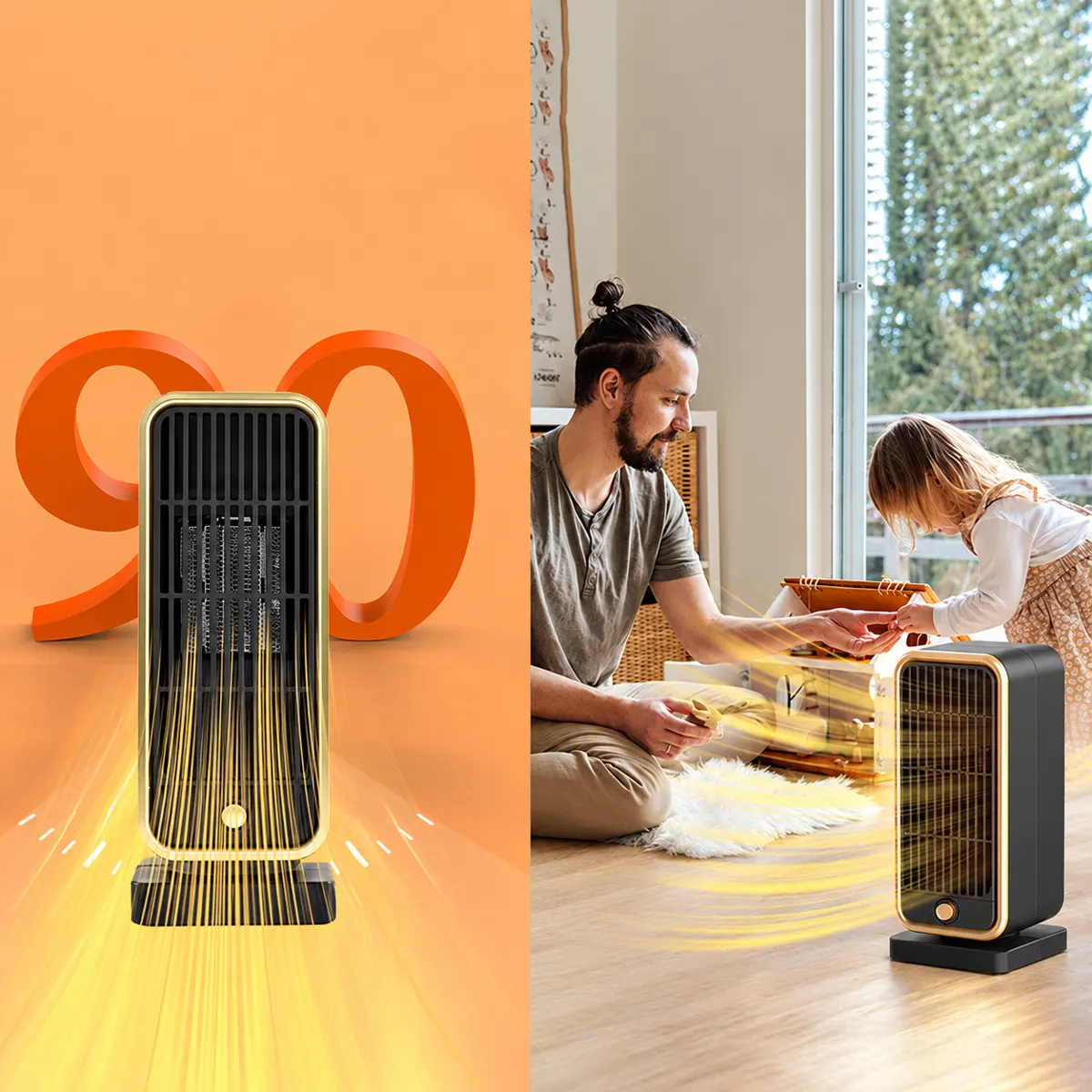
Keilini Heater Pro is a compact ceramic PTC fan heater. It starts producing warm air in around 3 seconds, spreads it through a 90° grille, and runs at roughly 36–45dB. A built-in thermostat holds your chosen temperature, a tip-over switch cuts power if it is knocked over, and a timer switches it off after 1–12 hours.
It is designed to warm the room you are in — not to replace central heating for a whole house.
Buying checklist
- Genuine ceramic PTC element, not just marketed as 'ceramic-style'
- Thermostat so it cycles rather than running at full power constantly
- Tip-over switch and overheat protection
- Unobstructed air inlet and outlet when positioned
- Timer for automatic switch-off
- Quiet fan, ideally under 45dB for bedrooms and desks
- Cool-touch casing
- UKCA or CE marking and a UK plug
Mistakes to avoid
- Blocking the rear air inlet against a wall or furniture
- Expecting heat to linger after switching off, as it would with oil-filled radiators
- Using it as the sole heat source in a very large or draughty room
- Placing it where trailing cables or paper are within reach of the airflow
- Skipping tip-over protection because the element itself is 'safer'
- Running it continuously instead of using the thermostat and timer
Our pick for warming one room
Keilini Heater Pro
Ceramic PTC · warm in ~3s · 36–45dB · tip-over & timer shut-off
£59.98£119.98Save 50%
Or 3 for £139.97 — £46.66 each.
See packs & prices- Free UK delivery
- 30-day returns
- Secure checkout
Frequently asked questions
Are ceramic heaters energy efficient?
All electric resistance heaters convert electricity to heat equally efficiently. Ceramic heaters help you use less by warming you quickly and cycling with a thermostat.
Are ceramic heaters safe?
The self-limiting element is a safety advantage; combine it with tip-over protection and a timer.
Ceramic or oil-filled — which is better?
Ceramic for fast personal warmth; oil-filled for slow, silent, long-running heat.
Can I leave a ceramic heater on overnight?
Only with tip-over and overheat protection, kept clear of bedding, and ideally on a timer so it switches off automatically rather than running unattended all night.
How much does a ceramic heater cost to run per hour in the UK?
A 1kW ceramic heater uses 1kWh per hour, so at 25p per kWh that's 25p an hour. Check your own electricity rate on your bill or Ofgem's price cap page and multiply by your heater's wattage.
Is a ceramic heater cheaper than central heating?
Often cheaper for heating just the room you're in for part of the day. For heating a whole house for long periods, gas central heating is usually cheaper per unit of heat.
Does a ceramic heater stay warm after you switch it off?
No, not for long — ceramic elements have little thermal mass, so the heat fades quickly once switched off, unlike an oil-filled radiator.
Are ceramic heaters better than oil-filled radiators?
They're better for fast, short bursts of personal warmth. Oil-filled radiators are better for slow, silent, long-running background heat. Which is 'better' depends on how you plan to use it.