 Keilini
Updated October 2026 · Written by the Keilini Heater Pro UK team
Quick answer
Keilini Heater Pro is a compact ceramic fan heater that warms the air around you in about 3 seconds, which suits anyone who wants quick personal warmth in a desk-sized space. An oil-filled radiator takes longer to warm up but then holds heat silently, which suits people heating a larger room for hours at a time. Neither is "better" in every case — it depends on the room, how long you're in it, and how much noise you're happy with.
How the two technologies actually work
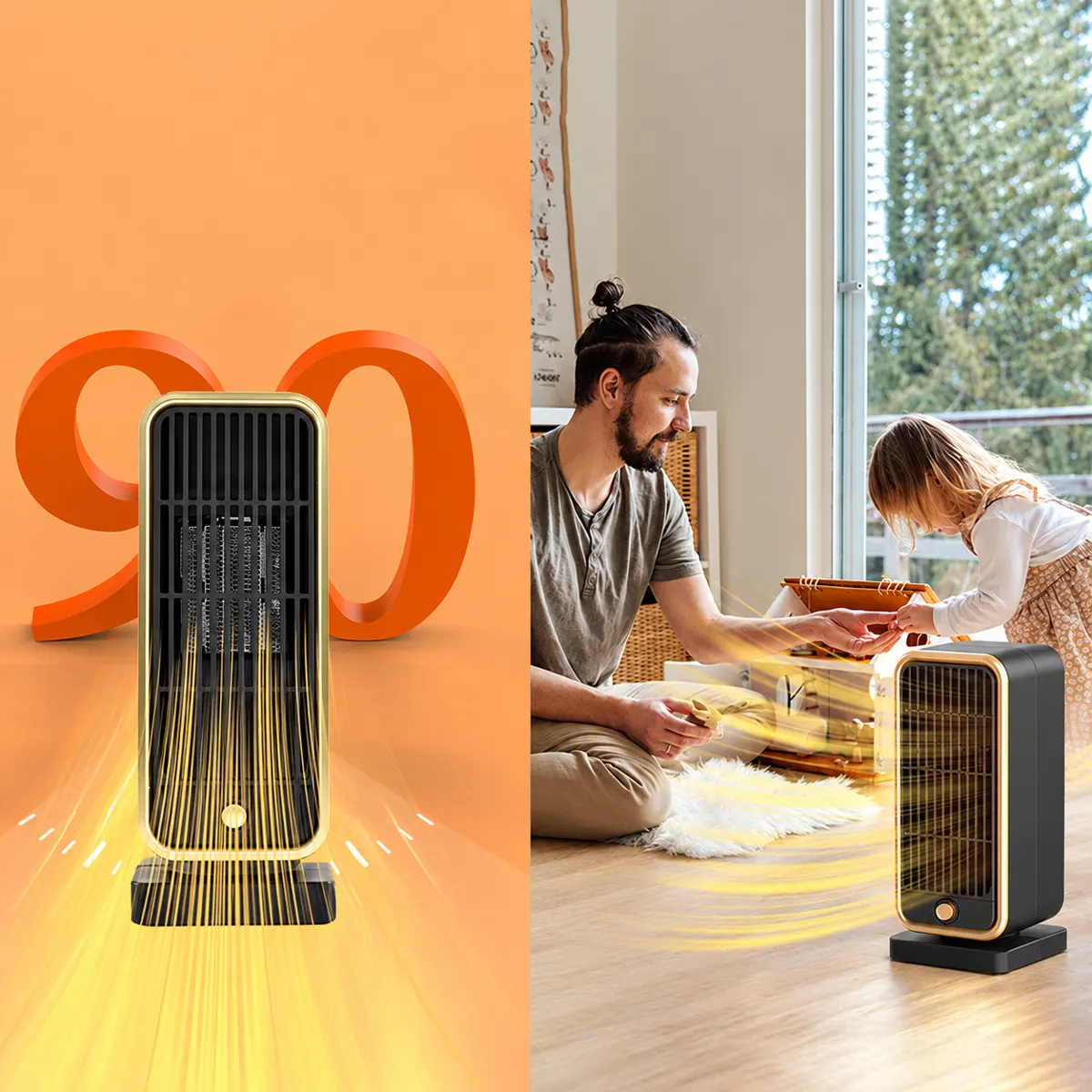
A ceramic PTC heater passes air over a heated ceramic element and blows it into the room with a small fan. It has almost no warm-up delay, which is why Keilini Heater Pro can put out warm air in roughly 3 seconds of switching on. An oil-filled radiator heats a sealed reservoir of oil inside metal fins; the oil takes 15–20 minutes or more to reach temperature, after which the fins radiate heat into the room with no fan and no noise.
Side-by-side comparison
| Keilini Heater Pro | Oil-filled radiator | |
|---|---|---|
| Heat-up time | ~3 seconds | 15–20 minutes |
| Size & portability | Compact, easy to move between rooms | Larger and heavier, usually left in one spot |
| Noise | Quiet fan, around 36–45dB | Silent — no fan |
| Airflow | 90° directed airflow grille | Radiant heat, no airflow |
| Running cost | Depends on wattage and run-time, not the technology — same per hour for equal wattage | |
| Thermostat | Built in | Varies by brand and model |
| Safety features | Tip-over switch, overheat protection, cool-touch casing | Varies by brand and model |
| Timer | 1–12 hour timer | Varies by model |
| Durability | Fan and element can wear over time | No moving parts — generally lasts longer |
| Best suited to | Quick, personal warmth in a smaller space | Long, steady background heat in a larger room |
Running costs compared
This is the question that surprises people most: the type of heater does not change what it costs to run. Every plug-in electric heater turns electricity into heat at essentially 100% efficiency, so what matters is the wattage and how long it's switched on — not whether the heat comes from oil, ceramic or a bare wire.
As an example only, at a rate of 25p per kWh (check your own rate on your energy bill or Ofgem's price cap page):
- •A 1kW heater run for four hours: about £1.00 — whether it's ceramic or oil-filled.
- •A 1.5kW heater run for four hours: about £1.50.
- •A 2kW heater run for four hours: about £2.00.
In practice, both types usually cost less than the "full power the whole time" figure, because a thermostat switches the element off once the room is warm. Where the two differ is in how that warmth is delivered: Keilini Heater Pro warms you quickly, so you can switch it off sooner; an oil radiator runs longer but you may need it on less often, since it keeps giving off heat after switch-off. For the full maths with your own tariff, try our running cost calculator — and check Ofgem's current price cap for the rate to use.
When Keilini Heater Pro makes more sense
- •You want to feel warm within seconds of switching on, not after a 20-minute wait
- •You need to move the heater between a home office, bedroom or living room during the day
- •You're heating one person at a desk or armchair rather than an entire large room
- •You want directional airflow pointed at where you're sitting
- •You'd rather not have a heavy appliance taking up permanent floor space
When an oil-filled radiator might suit you better
If you want to heat a larger room evenly for several hours, prefer completely silent operation, or want heat that lingers for a while after the heater switches off, an oil-filled radiator is a reasonable choice. Read our dedicated oil-filled radiator vs ceramic heater comparison for more detail on how the two perform across a full evening.
Our pick for warming one room
Keilini Heater Pro
Ceramic PTC · warm in ~3s · 36–45dB · tip-over & timer shut-off
£59.98£119.98Save 50%
See packs & prices- Free UK delivery
- 30-day returns
- Secure checkout
Which suits your situation?
If the general comparison still leaves you unsure, find the description that sounds most like you:
- •Home office worker, cold feet all day: Keilini Heater Pro. It warms you where you sit within seconds, so it's on less of the day.
- •Evenings in one large lounge: either can work — an oil radiator for silent all-evening heat, Keilini Heater Pro if you want warmth when you sit down and it can switch off when you go up to bed.
- •Background warmth while you sleep: an oil radiator on a low setting is the more common choice, though it should still be on a timer and clear of bedding. Keilini Heater Pro's timer makes it a reasonable option for a short pre-sleep warm-up.
- •Conservatory or garden office: Keilini Heater Pro for quick heat in a small, reasonably insulated space; an oil radiator holds warmth longer in a larger or leakier one.
- •Rented flat with no fixed heating in one room: Keilini Heater Pro — compact, no installation, easy to move and easy to take with you when you move.
Common myths, honestly answered
- •"Oil radiators are cheaper to run." No — wattage and run-time decide the cost, not the technology. A 1.5kW oil radiator and a 1.5kW ceramic heater cost the same per hour on full power.
- •"Fan heaters are too loud to work next to." The noisy ones are. A quiet ceramic heater runs at roughly 36–45dB — about library level — which is fine for a desk or bedroom.
- •"Oil radiators are always safer." Both types can be safe. What matters is the features: tip-over cut-off, overheat protection, and keeping either type clear of curtains and bedding.
- •"One heater can replace my central heating." For one room, a plug-in heater is a sensible alternative. For a whole house, gas central heating is almost always cheaper per unit of heat.
- •"A higher wattage heater costs more to run." Only if it runs longer. A higher-wattage heater warms a room faster and its thermostat may switch it off sooner.
Who should choose something else entirely
If your main aim is to cut your whole-home heating bill rather than warm one room, no plug-in heater — ceramic or oil — is a substitute for proper loft and wall insulation, draught-proofing, or servicing your boiler. If you have a very large open-plan space to heat continuously, a fixed heating solution may work out more practical than any portable heater. And if noise matters more than anything else to you, a silent oil radiator will usually beat a fan heater, even a quiet one like Keilini Heater Pro.
A buying checklist for either type
- •Does it have a tip-over or fall-over safety cut-out?
- •Does it have overheat protection?
- •Is there a timer so it can't run longer than you intend?
- •Is the noise level acceptable for where you'll use it — bedroom, office or living room?
- •Is it the right size and weight for how often you'll move it?
- •Does the retailer offer a fair returns policy if it's not right for your room?
Safety matters whichever you choose
Whatever heater you buy, keep it away from curtains, bedding and furniture, never leave it running unattended overnight, and don't use it with an extension lead that isn't rated for the load. See our heater safety guide for full guidance, drawn from Electrical Safety First and the London Fire Brigade.
Keilini Heater Pro ships with free tracked UK delivery and a 30-day money-back guarantee, so you can try it in your own room before deciding. See current pack prices, starting from £59.98.
Our pick for warming one room
Keilini Heater Pro
Ceramic PTC · warm in ~3s · 36–45dB · tip-over & timer shut-off
£59.98£119.98Save 50%
Or 3 for £139.97 — £46.66 each.
See packs & prices- Free UK delivery
- 30-day returns
- Secure checkout
Frequently asked questions
Is a ceramic heater cheaper to run than an oil-filled radiator?
Running cost depends on wattage and how long it's on, not the heating technology. A 1kW heater costs roughly the same to run whether it's ceramic or oil-filled — check our running cost page for the maths with your own tariff.
Which is safer, Keilini Heater Pro or an oil-filled radiator?
Both can be safe when used sensibly. Keilini Heater Pro has a tip-over switch, overheat protection and a cool-touch casing. Oil radiators have a heavy base and no exposed element, but take longer to cool after switching off. Always check a model's own safety features before buying.
Can I leave an oil heater on overnight instead of a ceramic heater?
Manufacturer guidance for both types usually advises against leaving any electric heater unattended overnight. If you need background warmth while sleeping, use a timer and follow the instructions for your specific model.
Why does Keilini Heater Pro feel warmer faster than my oil radiator?
Ceramic PTC heaters warm the air passing over the element almost immediately, so you feel moving warm air in seconds. Oil radiators heat a reservoir of oil first, which takes longer but then radiates steady heat for a while after switching off.
Is an oil-filled radiator better for a large living room?
Oil radiators are often chosen for larger rooms because they produce gentle, silent background heat over long periods. A compact ceramic heater like Keilini Heater Pro is better suited to warming one person or a smaller space quickly.
Do oil-filled radiators use more electricity than fan heaters?
Not necessarily — electricity use is set by wattage and run-time, not by whether the heater uses oil or a ceramic element. A lower-wattage heater run for longer can use similar energy to a higher-wattage heater run briefly.
How long do oil-filled radiators last compared with ceramic heaters?
Oil-filled radiators generally last longer because they have no moving parts — just a sealed oil reservoir and a simple element. Fan heaters like Keilini Heater Pro have a fan and an element that can wear over time, though a well-made one should give several years of normal use. In both cases, how you look after it and how often it runs matter as much as the type.
Can I use either heater with a thermostat plug or smart socket?
Yes — both are ordinary plug-in appliances, so a thermostat plug or smart socket works with either. Plug the heater directly into the smart plug rather than into an extension lead, and check that the plug is rated for the heater's power before relying on it.