 Keilini
Updated October 2026 · Written by the Keilini Heater Pro UK team
Quick answer
What is the quietest heater for a bedroom? Oil-filled radiators are silent; among fan heaters, look for low decibel ratings. Keilini Heater Pro runs at roughly 36–45dB.
What a bedroom heater needs
- Quiet operation — ideally under 45dB
- Timer so it switches off after you fall asleep
- Tip-over protection
- Cool-touch casing if children or pets are around
- No bright glowing elements
Using a heater safely at night
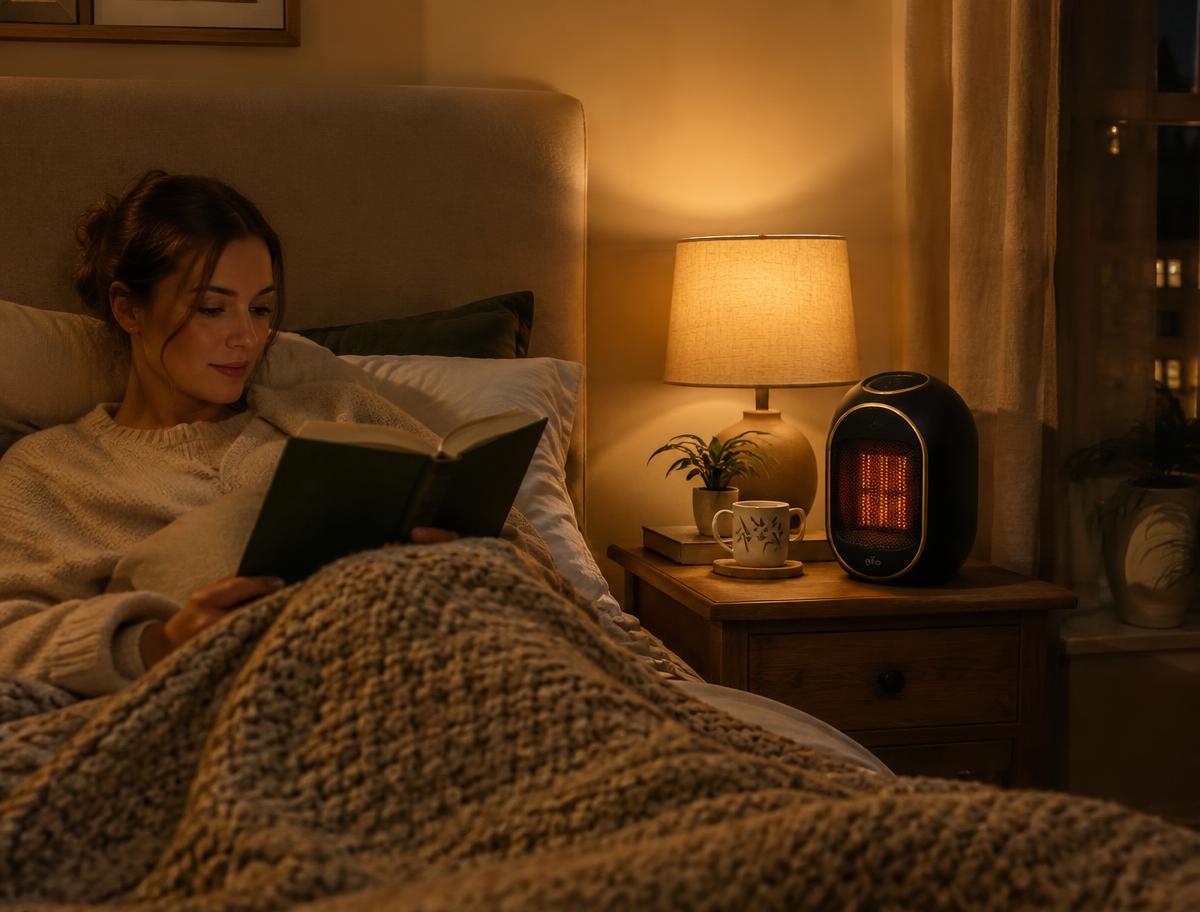
Warm the room before bed and set the timer rather than running it all night. Keep it at least a metre from bedding and curtains.
Sizing a heater for a bedroom
Most bedrooms are small to medium rooms, which is exactly where a compact ceramic heater does its best work — it has less air volume to warm than an open-plan living room. A single occupant in a standard double bedroom typically only needs the heater running for the time it takes to take the chill off before bed, not all night.
Box rooms and children's bedrooms are usually even quicker to warm, so short sessions on a timer are normally enough.
Placement in a bedroom
Keep any heater at least a metre from bedding, curtains, wardrobes and clothes left on the floor. Avoid placing it on a bedside table where cables or throws could be knocked over it, and never let a child or pet have unsupervised access to a heater that's switched on.
A stable position on the floor, pointed across the room rather than directly at a bed, spreads warmth more evenly and keeps the airflow away from bedding.
Our pick for warming one room
Keilini Heater Pro
Ceramic PTC · warm in ~3s · 36–45dB · tip-over & timer shut-off
£59.98£119.98Save 50%
See packs & prices- Free UK delivery
- 30-day returns
- Secure checkout
Managing damp and condensation in bedrooms
Bedrooms with poor ventilation can suffer condensation on cold windows overnight, especially in winter. A heater used for a short period before bed, combined with a slightly open window or trickle vent earlier in the day, helps reduce damp air rather than just masking it.
Don't dry clothes on or near a heater in a bedroom — this adds moisture to the air and increases condensation risk, as well as being a fire safety concern.
Using a heater to help you sleep, not disrupt it
- Warm the room 15–20 minutes before bedtime rather than overnight
- Set the timer so it switches off once you're likely to be asleep
- Choose a model quiet enough not to disturb light sleepers
- Avoid a glowing element if you prefer total darkness to sleep
- Keep it well clear of the bed itself, not tucked underneath or beside it
Who should consider a different option
If you need a bedroom warm all night — for example for an elderly relative, a baby, or someone who feels the cold badly — a heater left running unsupervised overnight isn't the safest choice even with protective features. In that case, a well-maintained central heating system on a timer, or professional advice on safe overnight heating, is usually more appropriate than a portable electric heater.
Where Keilini Heater Pro fits
Keilini Heater Pro is a compact ceramic PTC fan heater. It starts producing warm air in around 3 seconds, spreads it through a 90° grille, and runs at roughly 36–45dB. A built-in thermostat holds your chosen temperature, a tip-over switch cuts power if it is knocked over, and a timer switches it off after 1–12 hours.
It is designed to warm the room you are in — not to replace central heating for a whole house.
Buying checklist
- Check the room size matches a compact heater's realistic coverage
- Confirm noise level is low enough not to disturb sleep
- Make sure the timer suits your bedtime routine
- Check tip-over and overheat protection are both present
- Plan a stable floor position at least a metre from bedding and curtains
- Avoid placing it where children or pets could reach the controls
- Consider ventilation alongside heating to manage condensation
Mistakes to avoid
- Placing a heater directly next to or under the bed
- Running it all night without a timer out of habit
- Drying damp clothes on or near the heater
- Letting cables trail across a walkway in a dark bedroom
- Ignoring condensation because the room feels warm
- Giving a child unsupervised control of a bedroom heater
Our pick for warming one room
Keilini Heater Pro
Ceramic PTC · warm in ~3s · 36–45dB · tip-over & timer shut-off
£59.98£119.98Save 50%
Or 3 for £139.97 — £46.66 each.
See packs & prices- Free UK delivery
- 30-day returns
- Secure checkout
Frequently asked questions
What is the quietest heater for a bedroom?
Oil-filled radiators are silent; among fan heaters, look for low decibel ratings. Keilini Heater Pro runs at roughly 36–45dB.
Is it safe to sleep with a heater on?
Use the timer, keep clear space around it and choose one with tip-over and overheat protection.
Is it bad to sleep with a heater on all night?
It's safer to warm the room before bed and use a timer to switch off, rather than leaving any heater running unsupervised all night, even with protective features.
What heater is best for a child's bedroom?
A quiet, cool-touch heater with tip-over protection, overheat protection and a timer, always used under adult supervision and switched off before sleep.
Can a heater cause condensation in a bedroom?
Heating alone doesn't cause condensation, but a warm room with poor ventilation and moisture sources (like drying clothes) can worsen it. Ventilate as well as heat.
How long should I run a bedroom heater before bed?
Most small bedrooms warm up within 15–20 minutes with a fast-heating heater, so there's rarely a need to run it for hours beforehand.
Is an oil-filled radiator or a fan heater better for bedrooms?
Oil-filled radiators are silent and retain heat after switching off, which suits some people overnight; ceramic fan heaters warm the room faster for a pre-bed session. Either should be used with a timer.