 Keilini
Updated October 2026 · Written by the Keilini Heater Pro UK team
Quick answer
Are plug-in heaters cheaper than central heating? For heating one room for a few hours, often yes. For heating a whole house, a gas boiler is usually cheaper per unit of heat.
What makes a plug-in heater cheap to run?
- A thermostat that cycles off when the room is warm
- A timer so it never runs all night by accident
- Fast warm-up, so you don't pre-heat for ages
- Sizing — a compact heater for a small room or personal use
Working out the running cost
Cost per hour = heater kW × hours × your price per kWh. Use our running cost calculator to plug in your own tariff.
Plug-in heater safety
- Plug directly into a wall socket
- Don't use behind furniture or under desks with paper
- Never dry clothes on it
- Switch off when you leave the room
Matching a plug-in heater to the room
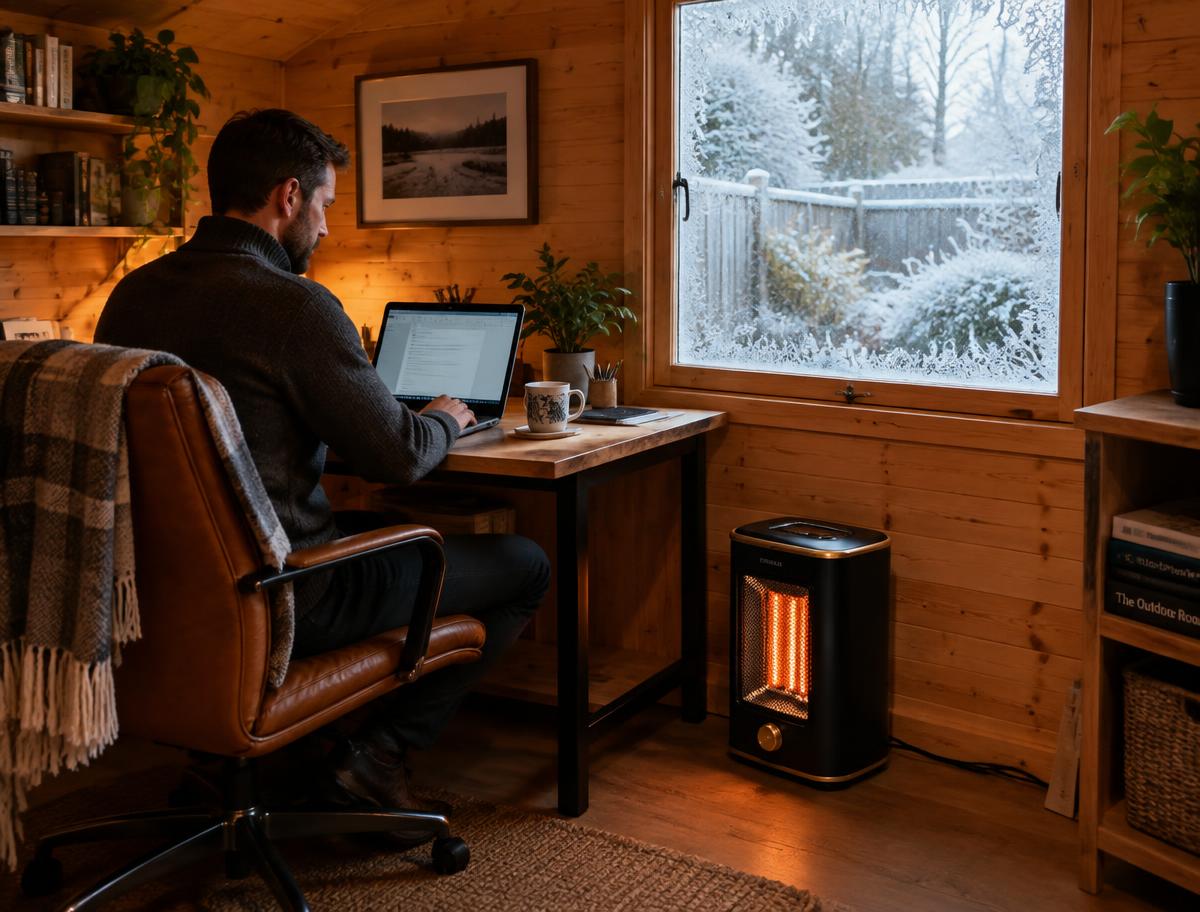
Plug-in heaters range from small personal warmers to larger units meant for whole rooms. For a bedroom, home office or small sitting room, a compact plug-in heater with a thermostat will usually bring a noticeable difference within minutes. For a large or draughty room, you may need to run it for longer or accept it as a supplement to your existing heating rather than a replacement.
Think about where you'll use it most: next to a desk, beside an armchair, or in the middle of a room. Placement affects how quickly you feel the benefit as much as wattage does.
Calculating the real cost of a plug-in heater
The formula is straightforward: cost per hour = wattage in kW × your electricity price per kWh. A 1kW heater costs 25p an hour at a 25p/kWh rate, or 30p an hour at 30p/kWh. Your exact rate is on your electricity bill, or you can check the current price cap on Ofgem's website.
A heater with a thermostat won't run at full power the whole time, since it switches off once the room reaches your chosen temperature, so real bills are often lower than a simple wattage-times-hours calculation.
Our pick for warming one room
Keilini Heater Pro
Ceramic PTC · warm in ~3s · 36–45dB · tip-over & timer shut-off
£59.98£119.98Save 50%
See packs & prices- Free UK delivery
- 30-day returns
- Secure checkout
Extension leads, sockets and electrical safety
Always plug a heater directly into a wall socket rather than a multi-socket extension block. If you absolutely need an extension lead, use a single heavy-duty one rated for the heater's power, fully uncoiled, and don't share the socket with other high-draw appliances like kettles or tumble dryers.
Check sockets and plugs periodically for warmth, discolouration or a burning smell, which can indicate an overloaded circuit, and stop using the heater immediately if you notice any of these signs.
UK rules and certification to check before buying
Look for a UKCA mark (or CE mark) and a UK three-pin plug on any plug-in heater sold in the UK — these indicate the product has been assessed against UK safety standards. Avoid unbranded listings with no visible safety marking, no manufacturer details, or a non-UK plug requiring an adaptor, since adaptors add another point of failure to the electrical connection.
Getting the most bill-saving value from a plug-in heater
The biggest saving usually comes from heating one occupied room instead of the whole house. Turn the central heating thermostat down slightly, close doors to keep warmth in, and use the plug-in heater's timer so it switches off automatically rather than running longer than needed.
If you often forget to switch it off, prioritise a model with a reliable timer and thermostat over one with extra features you won't use.
Where Keilini Heater Pro fits
Keilini Heater Pro is a compact ceramic PTC fan heater. It starts producing warm air in around 3 seconds, spreads it through a 90° grille, and runs at roughly 36–45dB. A built-in thermostat holds your chosen temperature, a tip-over switch cuts power if it is knocked over, and a timer switches it off after 1–12 hours.
It is designed to warm the room you are in — not to replace central heating for a whole house.
Buying checklist
- Thermostat so it cycles rather than runs constantly at full power
- Timer with a range that suits how you'll use it
- Tip-over switch and overheat protection
- UKCA or CE marking with a genuine UK plug
- Stable base suited to your flooring
- Cool-touch casing if used around children or pets
- Clear wattage information so you can estimate running costs
- Free UK delivery and a straightforward returns policy
Mistakes to avoid
- Plugging it into a crowded multi-socket extension lead
- Ignoring warm or discoloured sockets and plugs
- Buying an unbranded heater with no visible safety marking
- Running it at full power all day instead of letting the thermostat cycle
- Using it behind furniture or curtains, restricting airflow
- Forgetting to use the timer when leaving the house or going to bed
Our pick for warming one room
Keilini Heater Pro
Ceramic PTC · warm in ~3s · 36–45dB · tip-over & timer shut-off
£59.98£119.98Save 50%
Or 3 for £139.97 — £46.66 each.
See packs & prices- Free UK delivery
- 30-day returns
- Secure checkout
Frequently asked questions
Are plug-in heaters cheaper than central heating?
For heating one room for a few hours, often yes. For heating a whole house, a gas boiler is usually cheaper per unit of heat.
Do plug-in heaters use a lot of electricity?
They use their rated wattage while the element is on. A thermostat reduces how often that happens.
Can I leave a plug-in heater on all day?
Only with appropriate safety features and supervision. Using the built-in timer is recommended.
Can I leave a plug-in heater on overnight?
Only if it has tip-over and overheat protection, is kept clear of bedding, and ideally has a timer set so it doesn't run unattended all night.
How much does a plug-in heater cost to run per hour in the UK?
A 1kW heater uses 1kWh per hour, so at 25p per kWh that's 25p an hour. Check your own rate on your bill or Ofgem's price cap page and multiply by your heater's wattage.
Is a plug-in heater cheaper than central heating?
Usually yes for heating just one room for part of the day, since you avoid warming the whole house. For heating the entire home continuously, gas central heating is typically cheaper per unit of heat.
Can I use a plug-in heater with an extension lead?
It's best avoided. Plug directly into a wall socket where possible, and if you must use an extension lead, use a single heavy-duty one rated for the heater's power, fully unwound.
Do plug-in heaters need to be serviced?
No regular servicing is needed, but check the plug, cable and casing periodically for damage and keep the air inlet and outlet free of dust.