 Keilini
Quick answer: A good portable heater for a UK home should warm up quickly, be light enough to carry between rooms, have proper safety cut-outs, and run quietly enough for a bedroom or home office. Keilini Heater Pro is a compact ceramic fan heater built around those priorities, with free UK delivery and a 30-day money-back guarantee if it isn't right for your room.
What makes a good portable heater?
- Fast heat-up — ceramic heaters typically warm the air within seconds, well ahead of oil radiators
- Safety cut-outs — look for both a tip-over switch and overheat protection
- Low noise — important in bedrooms, nurseries and home offices where you're on calls
- Manageable size and weight — easy to carry from room to room rather than a fixture you leave in one place
- A timer — so the heater can't be left running longer than intended
Why Keilini Heater Pro fits the brief
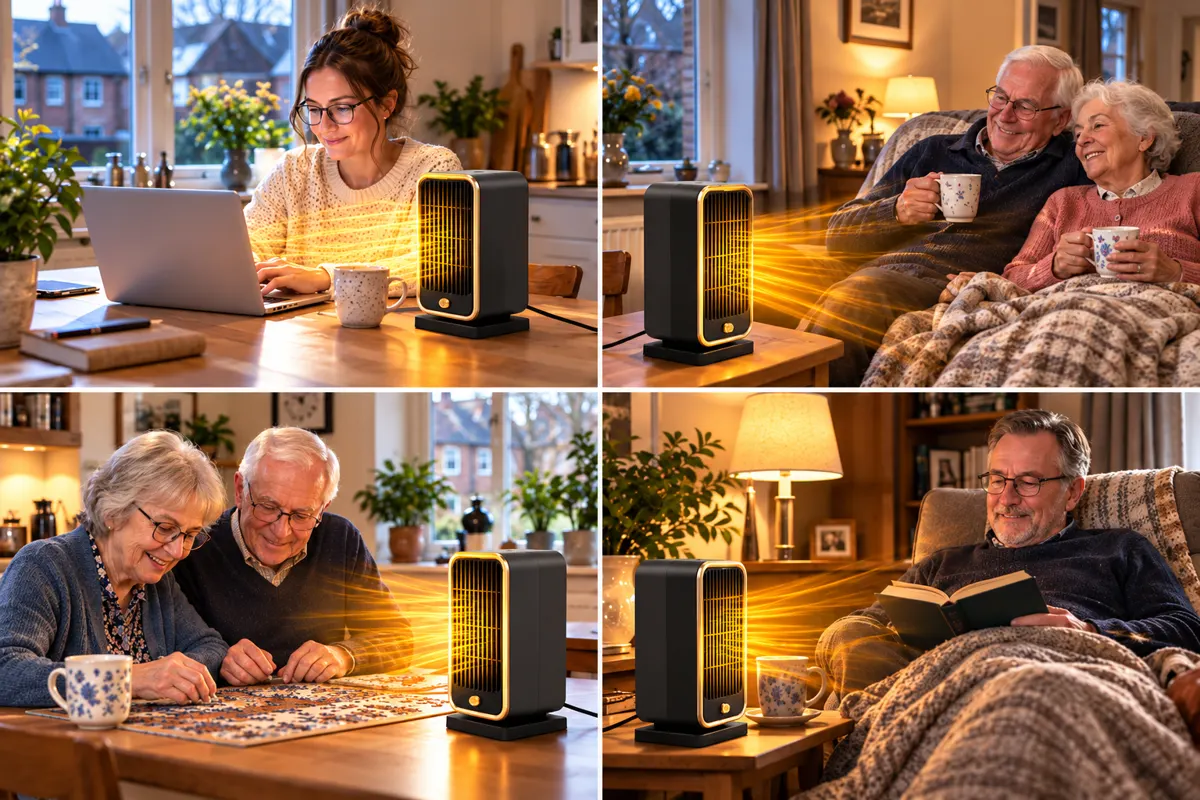
Keilini Heater Pro is a compact ceramic PTC space heater that produces warm air in around 3 seconds of switching on. It has a 90° airflow grille to direct heat where you need it, runs at roughly 36–45dB so it won't drown out a TV or video call, and includes a tip-over switch, overheat protection and a 1–12 hour timer. The casing stays cool to the touch during use, and it comes with free tracked UK delivery and a 30-day money-back guarantee, so you can test it in your own room risk-free.
Where people use a portable heater
Common spots include home offices, bedrooms, nurseries (always supervised), conservatories, garden rooms, caravans with a suitable mains hook-up, and older or draughty flats where central heating struggles to keep one room comfortable. A portable heater won't replace your central heating, but it can top up warmth exactly where you're sitting.
Ceramic, oil, convector or halogen: a quick comparison
| Type | Heat-up speed | Noise | Best for |
|---|---|---|---|
| Ceramic fan (e.g. Keilini Heater Pro) | Seconds | Quiet fan | Quick personal warmth, portability |
| Oil-filled radiator | 15–20+ minutes | Silent | Long, steady background heat |
| Convector | Minutes | Mostly silent | Gentle whole-room warmth |
| Halogen/infrared | Instant (direct warmth) | Silent | Warming a person, not a room |
For a deeper look at ceramic versus oil, see our oil-filled radiator vs ceramic heater page and our Keilini Heater Pro vs oil heater comparison.
A buying checklist before you order
- Check it has a tip-over switch and overheat protection, not just a basic on/off
- Check the noise level suits where you'll use it most
- Check there's a timer, so it can't be left running by accident
- Check the delivery and returns policy — free UK delivery and a 30-day guarantee reduce the risk of buying the wrong heater
- Work out roughly what it will cost to run using its wattage and your electricity rate
Who should choose a different type of heater
If you want to heat a large, open-plan room for many hours with no fan noise at all, an oil-filled radiator will usually suit you better than any compact fan heater. If you're trying to cut your whole-house energy bill rather than warm one room, look first at insulation, draught-proofing and your boiler setup — portable heaters are for topping up warmth in the room you're actually using, not replacing central heating. And if you need heat for a workshop or garden office with specific ventilation or wiring requirements, check our heater for garden office guide first.
Running cost basics
Every electric heater's running cost comes down to its wattage and how long it's switched on. As a simple example, a 1kW heater running at 25p/kWh costs around 25p an hour — always check Ofgem's current price cap for the rate that applies to you, and see our running cost guide for more worked examples, or our wider cheapest heater to run in the UK page.
Staying safe with any portable heater
Keep heaters clear of curtains, furniture and bedding, don't drape anything over them, and avoid running them on unsuitable extension leads. See our full heater safety guide for more, with guidance drawn from Electrical Safety First.
Frequently asked questions
What is the best type of portable heater for a UK home?
It depends on your room and habits. Ceramic fan heaters like Keilini Heater Pro warm up almost instantly and are easy to carry between rooms, while oil-filled radiators suit quiet, long background heating in a larger space. There's no single best type — it's about matching the heater to how you'll use it.
Is it cheap to run a portable heater all day?
Running cost depends on wattage and hours used, not on the heater being portable. A 1kW heater at 25p/kWh costs roughly 25p an hour — check Ofgem's price cap for your own rate and see our running cost guide for worked examples.
Can I use a portable heater in a small bedroom?
Yes, many people use compact heaters in bedrooms, though most manufacturers advise against leaving any electric heater running unattended while you sleep. A timer, like the 1–12 hour timer on Keilini Heater Pro, lets it switch off automatically.
Are portable heaters safe to leave near curtains or bedding?
No heater should be placed close to curtains, bedding or furniture. Keep at least a metre of clear space around any portable heater and always follow the manufacturer's safety instructions.
How do I choose between a fan heater and a convector heater?
Fan heaters, including ceramic PTC models, circulate warm air quickly and are good for immediate personal warmth. Convector heaters warm more gradually and often run more quietly. Think about whether you want speed or silence, and in what size of room.
Will a portable heater work in a caravan or garden room?
Many portable electric heaters can be used in garden rooms or caravans with a suitable mains hook-up, provided the space is properly wired and ventilated. Always check your specific heater's instructions and the wiring of the space before use.
See the full specifications or read our Keilini Heater Pro review.